PROJECT STUDY
PrototypeVenue & Decor Visualizer
Plan a space. Explore a design direction.
An event-design prototype with privacy-aware venue capture, labelled preview workflows, and proposal tooling behind a bilingual foundation.
Explore the build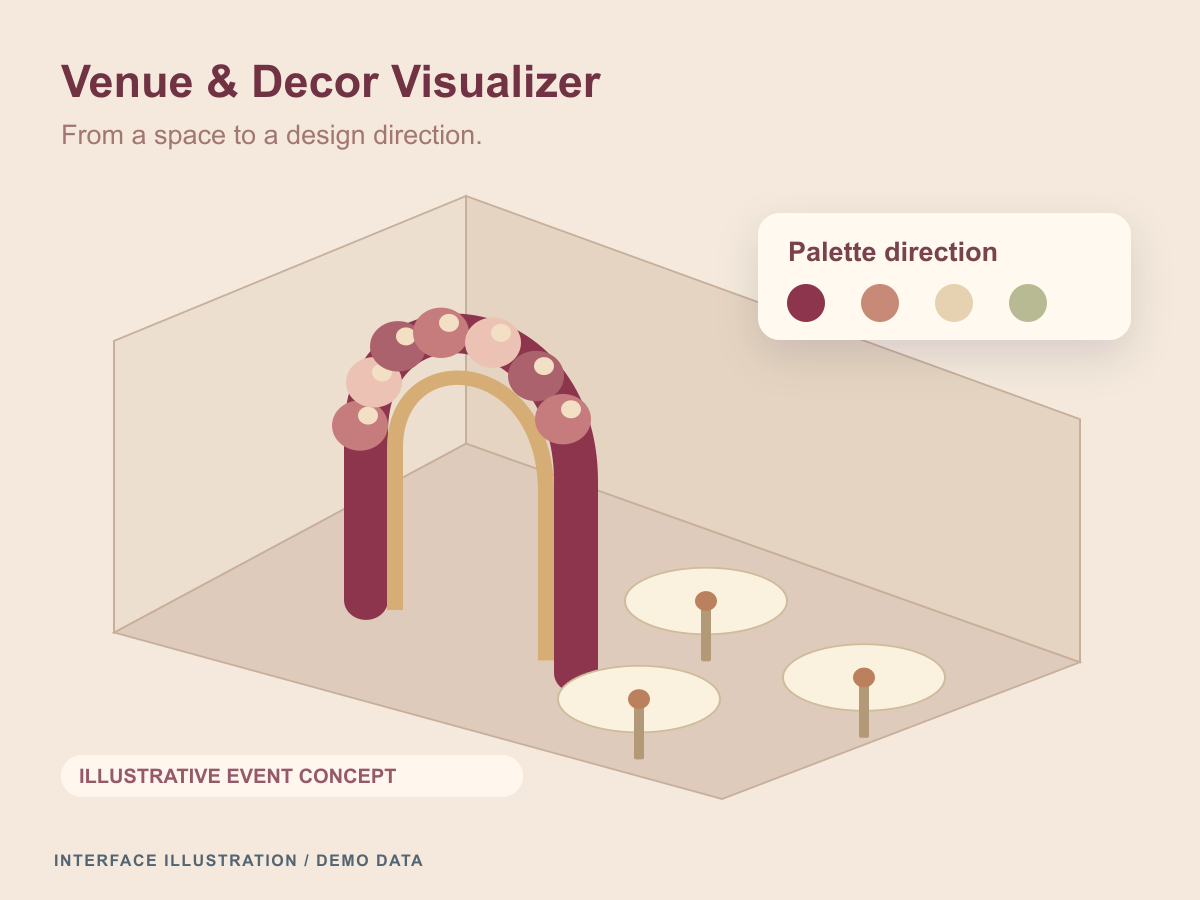
At a glance
- Stage
- Prototype
- Industry
- Events and weddings
- Context
- Internal product
- Capabilities
- 7
- Technologies
- 11
- Year
- 2026
Recorded in the project foundation handoff notes; a historical milestone, not a current test run or customer result
Recorded at the same foundation milestone, before complete end-user feature screens; not rerun for this portfolio update
The challenge
Event concepts need a shared visual reference.
A decorator, venue team, and client may picture different things from the same brief, while the proposal still needs practical quantities, pricing, and a plan for execution.
Venue photography also brings constraints. A useful preview should respect the room and distinguish a generated concept from a promise of what will be built. Images containing people require careful handling before they enter a processing pipeline.
What we built
Decor Visualizer is an internal engineering prototype with a substantial backend and a reusable frontend foundation:
Venue and photo workflows
Organization-aware venue records, capture uploads, access levels, markers, and alignment information
Privacy-aware image processing
People-masking boundaries and controlled image handling before stored photography can reach AI providers
Labeled preview services
Background preview jobs, generation status, image ratings, detail crops, and exports carrying an AI preview label and provenance information
Region edits and instant recolor
Backend editing constraints and a formula-based recolor implementation shared with browser utilities
Design and sharing services
Structured briefs, versioned options, share links, and review/comment workflows in the backend
Proposal and setup tooling
Bill-of-materials calculations, availability checks, quotation/proposal output, and setup checklist services
AR-support services
Scene packages, placement assistance, scene synchronization, and capture endpoints; this is backend support, not a claim of device-tested AR
Venue and photo workflows
Organization-aware venue records, capture uploads, access levels, markers, and alignment information
Privacy-aware image processing
People-masking boundaries and controlled image handling before stored photography can reach AI providers
Labeled preview services
Background preview jobs, generation status, image ratings, detail crops, and exports carrying an AI preview label and provenance information
Region edits and instant recolor
Backend editing constraints and a formula-based recolor implementation shared with browser utilities
Design and sharing services
Structured briefs, versioned options, share links, and review/comment workflows in the backend
Proposal and setup tooling
Bill-of-materials calculations, availability checks, quotation/proposal output, and setup checklist services
AR-support services
Scene packages, placement assistance, scene synchronization, and capture endpoints; this is backend support, not a claim of device-tested AR
The React foundation includes authentication, role guards, bilingual copy, and reusable media components. The current frontend feature registry contains authentication screens; complete venue, design, preview, quote, and sharing journeys are still in development.
How it works
FastAPI workflows and imaging
A FastAPI application owns the workflows and job processing. SQLAlchemy supplies the data layer, with a development database and a configurable deployment path. Image processing uses Python, OpenCV, Pillow, and provider interfaces for AI and other imaging tasks.
Provider registry and labels
The provider registry separates remote or heavier model integrations from deterministic processing paths. Proposal arithmetic stays in code. Image labels and provenance keep generated output identifiable as a concept rather than original photography.
A React frontend foundation
The frontend uses React, TypeScript, and Vite. Its shared components and browser imaging utilities provide the starting point for the end-user design experience.
Current stage
Prototype
- Research
- Prototype
- Pilot
- Production
This is a backend and application-foundation prototype. A decorator cannot yet complete the whole workflow through the current frontend. GPU integrations and AR device behavior were not executed or benchmarked during this portfolio review.
Read the full status
The foundation handoff notes record 828 backend tests and 345 frontend tests passing at that earlier milestone. These are historical documentation figures, not fresh validation, production acceptance, or client outcomes. No real decorator, venue partner, customer adoption, or commercial result is claimed.
Where this fits
Visual planning tools become more useful when their image workflows connect to the operational work behind them. We combine computer vision, AI solutions, and business systems around review, access, and practical delivery. Discuss your workflow with our team.
KEEP EXPLORING
Another problem. A different approach.
Claim Triage
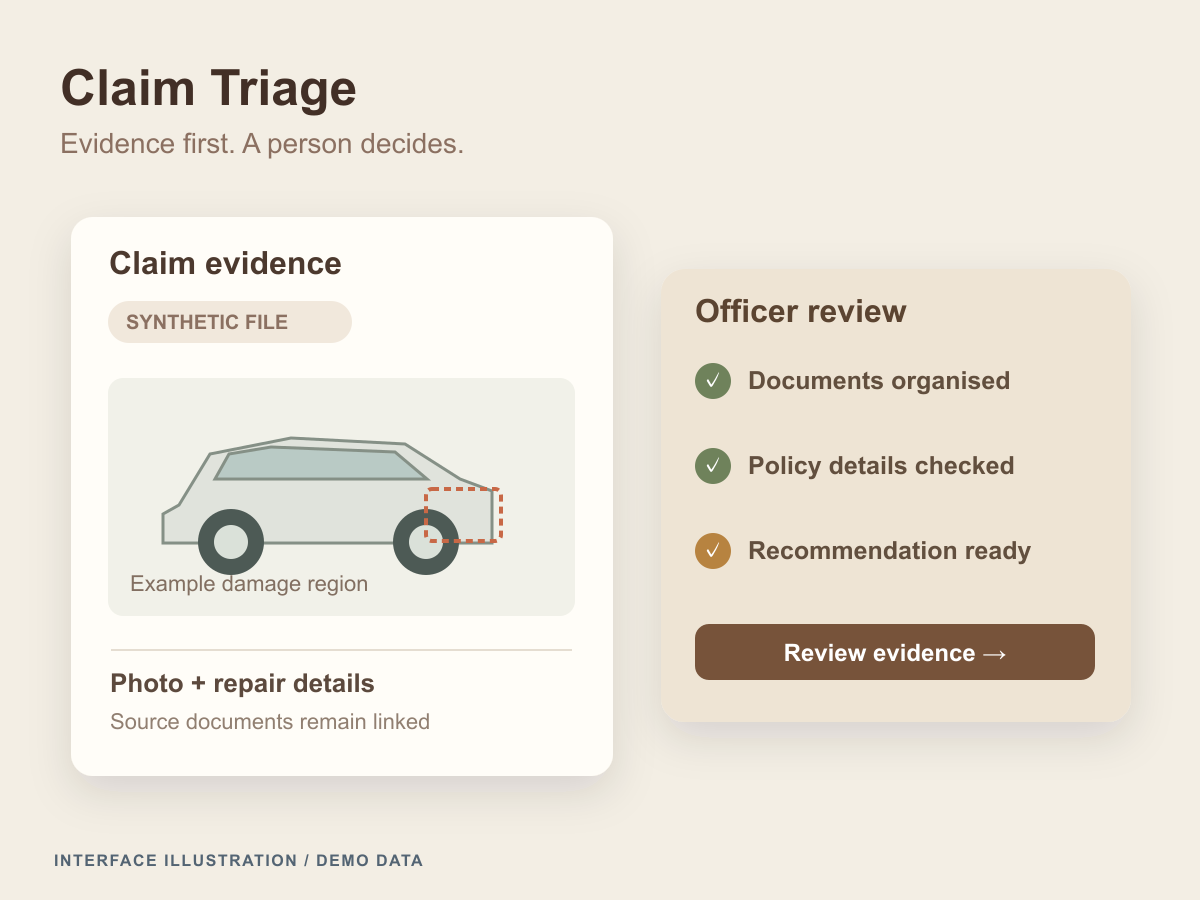
An insurance review workspace linking claim documents, policy and repair checks, and traceable recommendations for a human officer.
Football Coach AI
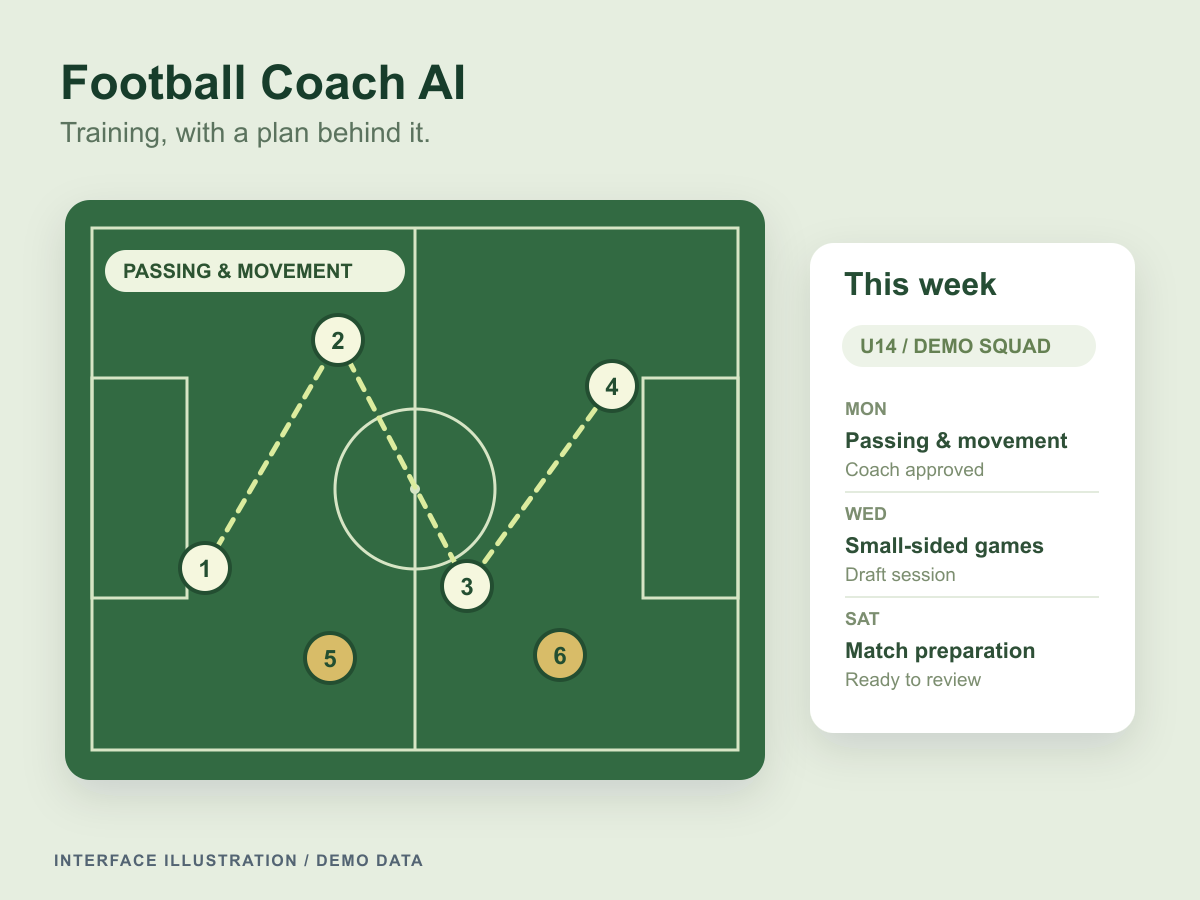
An academy workspace connecting training plans, curriculum, matches, and team insights, with a source-grounded assistant and coach approval.
Let’s connect the dots
Let's put these ideas to work.
Share a process, product, or problem you want to improve. We will work through the possibilities together.