PROJECT STUDY
PrototypeClaim Triage
Trace the evidence. Support the officer's decision.
An insurance review workspace linking claim documents, policy and repair checks, and traceable recommendations for a human officer.
Explore the build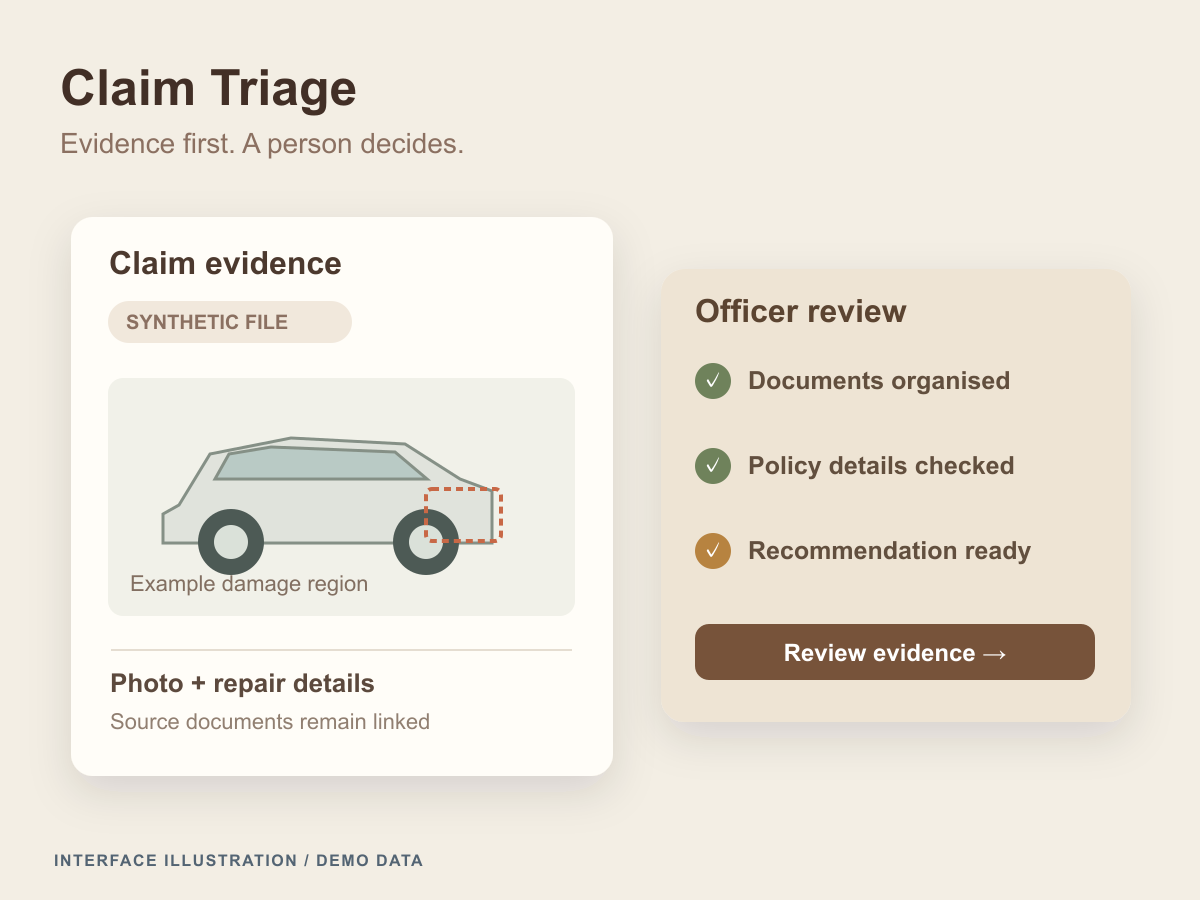
At a glance
- Stage
- Prototype
- Industry
- Insurance
- Context
- Internal product
- Capabilities
- 5
- Technologies
- 9
- Year
- 2026
Key fields extracted correctly in a historical 50-case synthetic evaluation using OCR and rules; this is not real-claim accuracy
Documented processing time for a 20-page claim on a laptop CPU; production throughput has not been measured
The challenge
A motor claim can arrive as a mixture of phone photos, scanned identity documents, a policy, a workshop estimate and a multi-page PDF.
An officer must check completeness, compare details across documents, assess repair costs and apply authority rules before making a decision.
The hard part is keeping the reasoning visible. A recommendation is only useful when the officer can see what supports it, what is missing and what needs another person's review.
What we built
Claim Triage brings intake, document processing and review into one workspace.
Guided intake
Policyholders and officers upload documents through a checklist with photo guidance and instant quality checks. The system accepts PDF, JPG, PNG and HEIC files, with up to 50 files per claim
Evidence the officer can inspect
OCR, page classification and PDF splitting organise the bundle. Extracted values retain their confidence, page and position, so the workbench can highlight the source
Cross-checks and repair estimates
Policy coverage, identity, vehicle details and invoice arithmetic are checked together. A damage-model adapter feeds severity rules, parts prices and labour rates into an editable cost range
Review and approval
Officers receive reasons, missing-information requests, risk signals and proposed next steps. Supervisors, investigators and surveyors have their own queues, with explicit authority limits and decision records
Rules operations can change
Versioned decision tables control coverage, deductibles, red flags and routing. Signed webhooks and a core-system adapter support integration
Guided intake
Policyholders and officers upload documents through a checklist with photo guidance and instant quality checks. The system accepts PDF, JPG, PNG and HEIC files, with up to 50 files per claim
Evidence the officer can inspect
OCR, page classification and PDF splitting organise the bundle. Extracted values retain their confidence, page and position, so the workbench can highlight the source
Cross-checks and repair estimates
Policy coverage, identity, vehicle details and invoice arithmetic are checked together. A damage-model adapter feeds severity rules, parts prices and labour rates into an editable cost range
Review and approval
Officers receive reasons, missing-information requests, risk signals and proposed next steps. Supervisors, investigators and surveyors have their own queues, with explicit authority limits and decision records
Rules operations can change
Versioned decision tables control coverage, deductibles, red flags and routing. Signed webhooks and a core-system adapter support integration
How it works
Manual review and approval
The processing pipeline records each stage and hands failures to manual review. A fraud signal can trigger an investigation; it cannot automatically decline a claim. Declines and decisions above an officer's authority require additional approval.
Optional, privacy-gated language models
Language-model features are optional, sit behind a privacy gate and fall back to rules or templates. The review workflow remains useful without a language model.
Current stage
Prototype
- Research
- Prototype
- Pilot
- Production
This is a working internal prototype tested with synthetic claims. The historical evaluation recorded 163 of 163 key fields correctly extracted across 50 synthetic cases using OCR and rules. The documented laptop timing is a development result, not a production service guarantee.
Read the full status
Real damage assessment needs weights trained and validated for the insurer's photos. The demo uses annotated synthetic images; real claims without a trained model are sent for manual or surveyor assessment. No live insurer pilot or production deployment is claimed.
Where this fits
The same pattern applies to document-heavy decisions: organise the evidence, automate repeatable checks and keep human authority clear. Explore our AI solutions, computer vision and business systems, or discuss your review workflow.
KEEP EXPLORING
Another problem. A different approach.
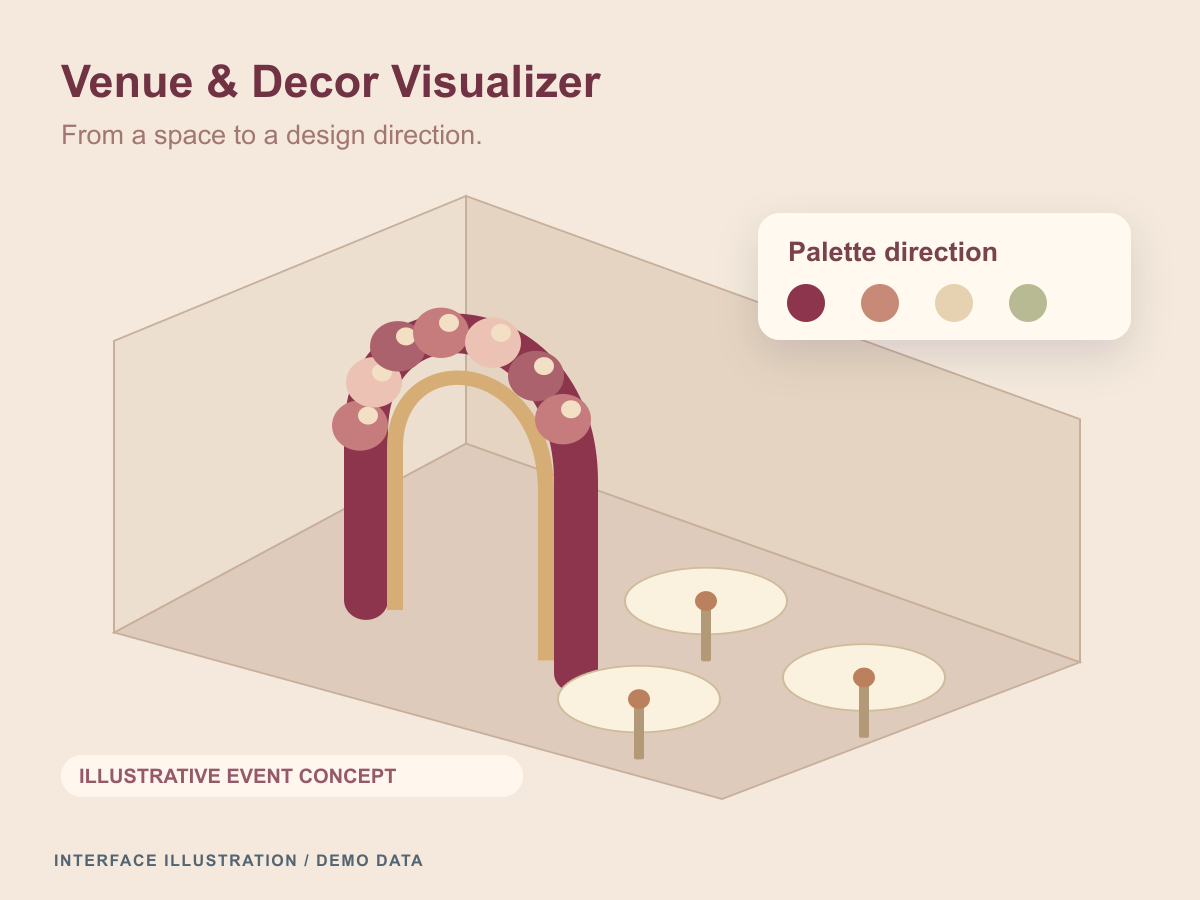
Venue & Decor Visualizer
An event-design prototype with privacy-aware venue capture, labelled preview workflows, and proposal tooling behind a bilingual foundation.
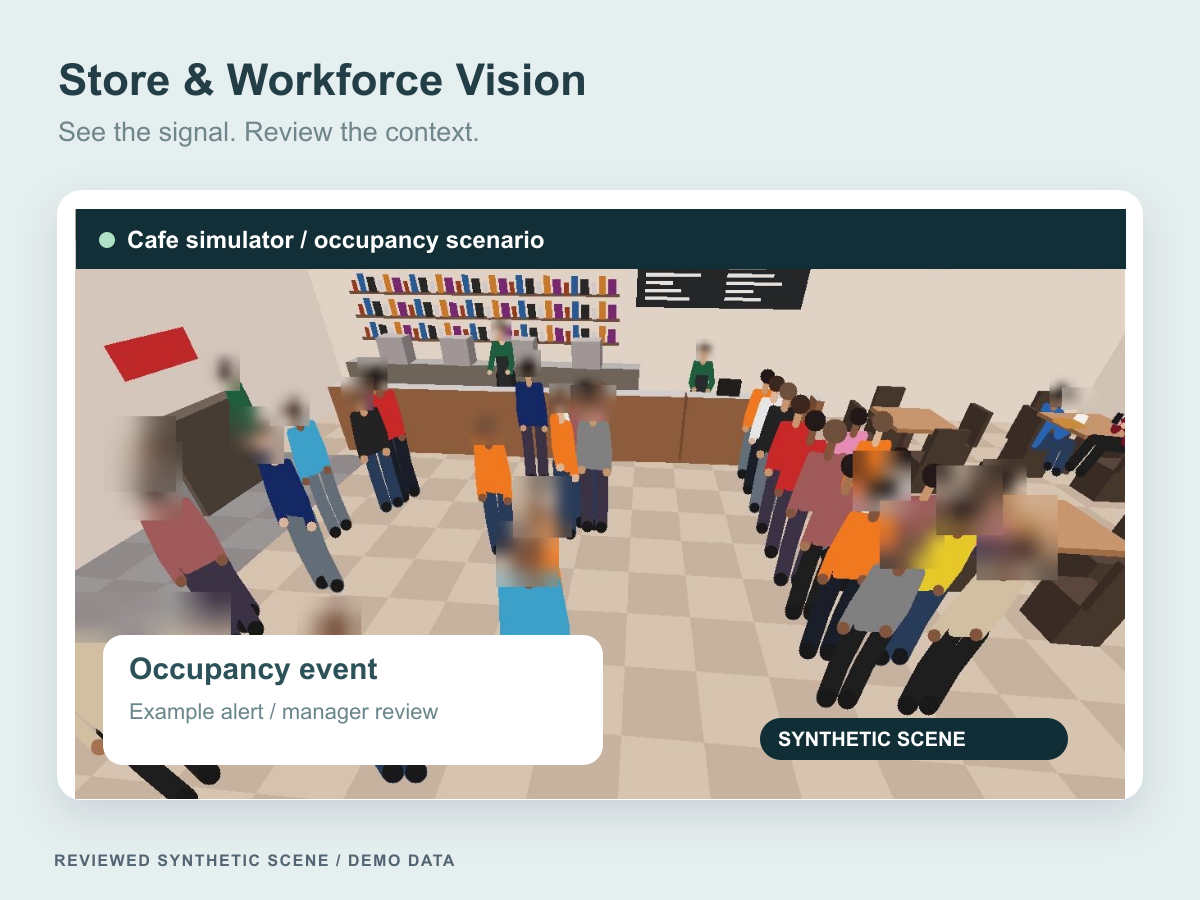
Store & Workforce Vision
A privacy-aware store operations prototype for occupancy, queues, and zone events, with configurable alerts and manager review.
Let’s connect the dots
Let's put these ideas to work.
Share a process, product, or problem you want to improve. We will work through the possibilities together.