Mobile apps
Useful experiences. Wherever work happens.
Give your customers and your team the tools they need in their hands. We design mobile experiences that make important tasks feel simple, on the move or at the desk.
From business need to working solution.
A clear scope. A thoughtful experience. A practical path to launch.
The starting point
Sound familiar?
The problems behind the project are where the useful work begins.
Your customers expect access on the move
A desktop workflow is not always the right fit for repeat purchases, bookings, account access, and timely updates.
Field work depends on paper and messages
Tasks, photographs, and reporting can get lost when a team moves between locations and disconnected conversations.
An app idea needs a practical first release
A clear feature set and a considered platform choice help you avoid building more than users need.
What we build
Useful by design.
Concrete capabilities, shaped around your workflow and the people who use it.
Customer mobile applications
Account access, bookings, membership, and ordering journeys built around the tasks customers return to.
Field team tools
Task assignment, checklists, evidence capture, and status updates that connect back to your operations.
Offline-capable workflows
Local data capture and controlled synchronization for agreed tasks in places with intermittent connectivity.
Connected app ecosystems
A mobile interface, administrative dashboard, and APIs that work together as one product.
The foundation
Technology that fits the job.
We choose the stack around your requirements, integrations, and long-term ownership. The approach is agreed during discovery.
Applications
Connections
Release
How we work
No mystery between idea and launch.
You can see the direction, review the work, and understand what comes next.
Understand
We map your workflow, listen to the people who use it, and agree on the business problem worth solving.
A clear scope, priorities, and a practical plan.
Design
We turn the plan into user journeys, interface prototypes, and a technical approach you can review before development.
An agreed prototype and implementation roadmap.
Build
We develop in focused iterations, demonstrate working software, and test the important workflows with your team.
A tested product, with progress visible throughout.
Grow
We prepare the release, hand over documentation, and plan improvements around feedback from real use.
A supported launch and a roadmap for what comes next.
Selected work
See the thinking in practice.
Explore project approaches, their scope, and their documented status.
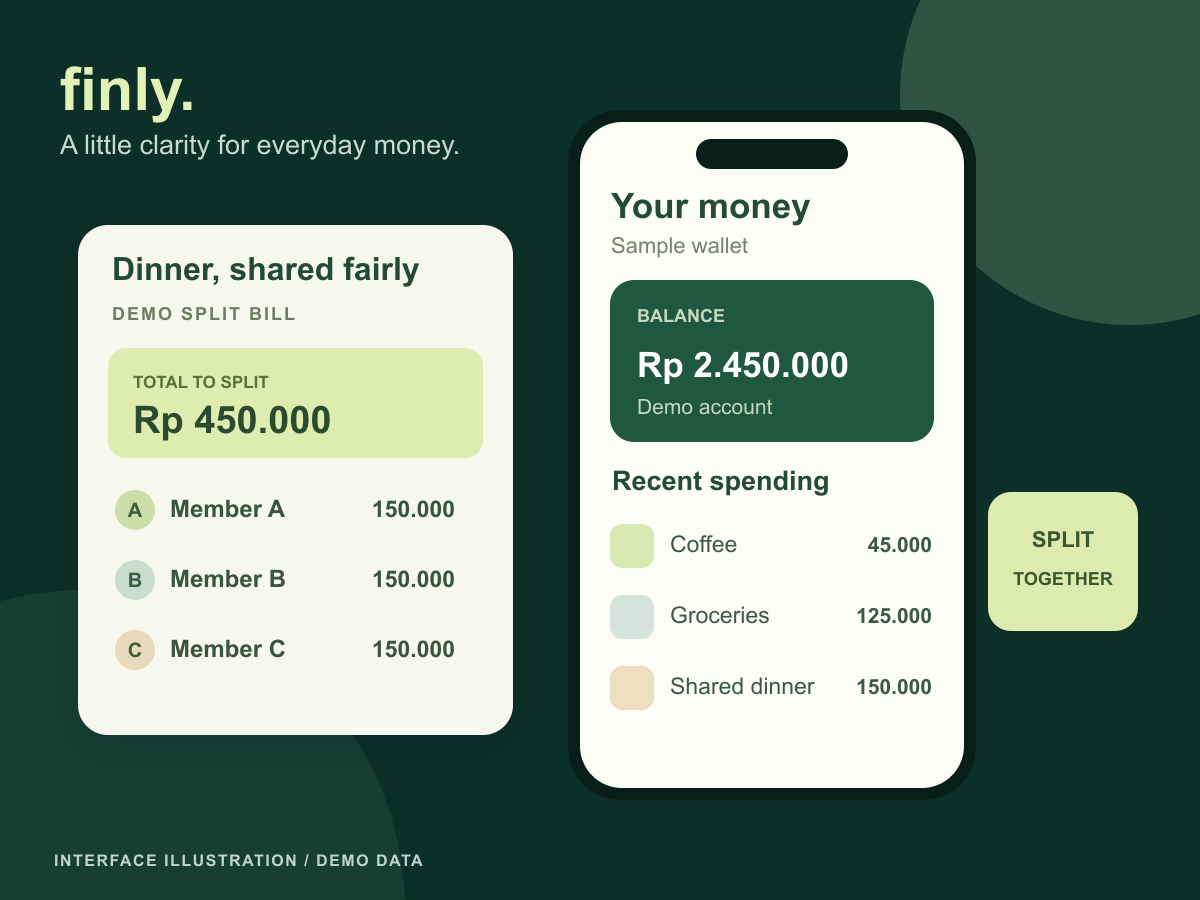
Finly
A personal-finance MVP connecting receipt review, shared bills, realtime item claims, and traceable settlement on a balanced ledger.
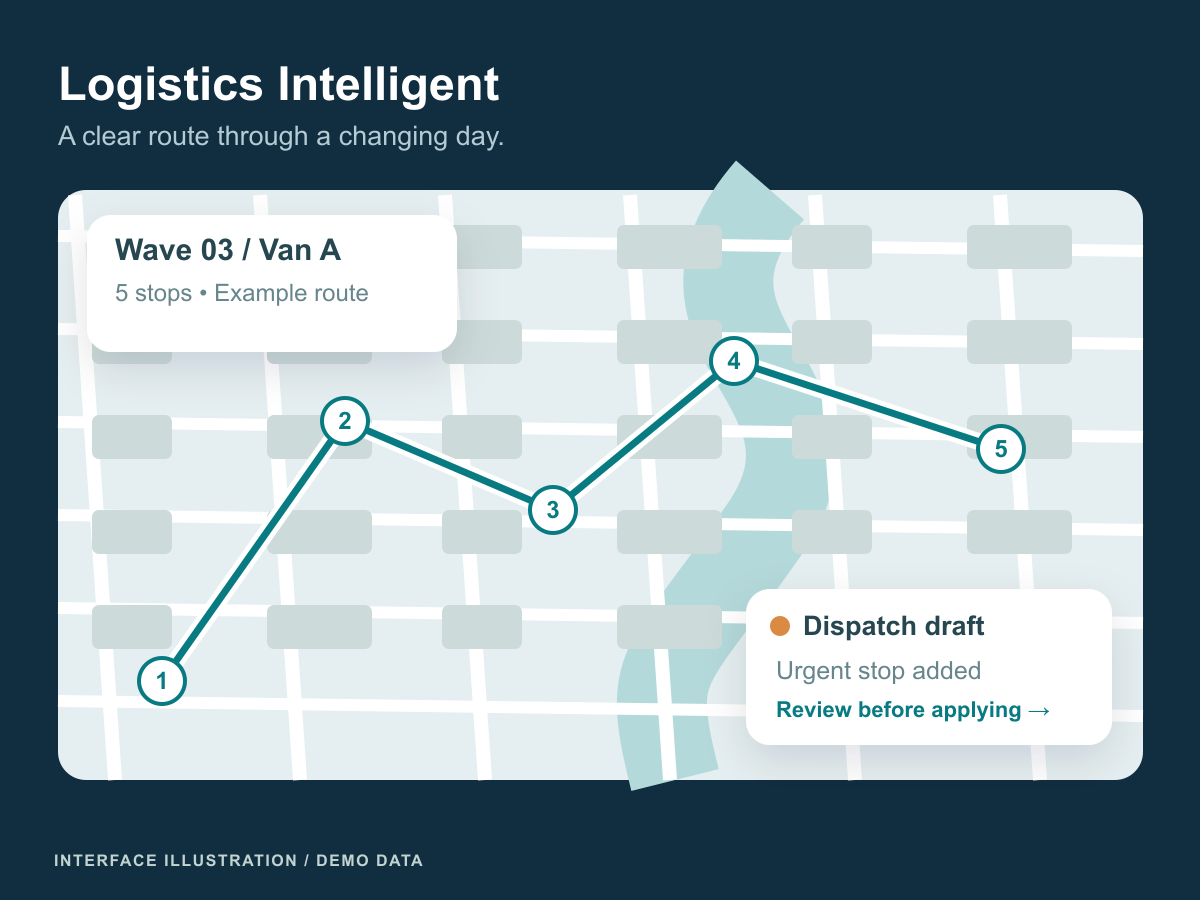
Logistics Intelligent
A dispatch and supply-planning prototype for delivery routes, fleet disruptions, and retail replenishment across multiple warehouses.
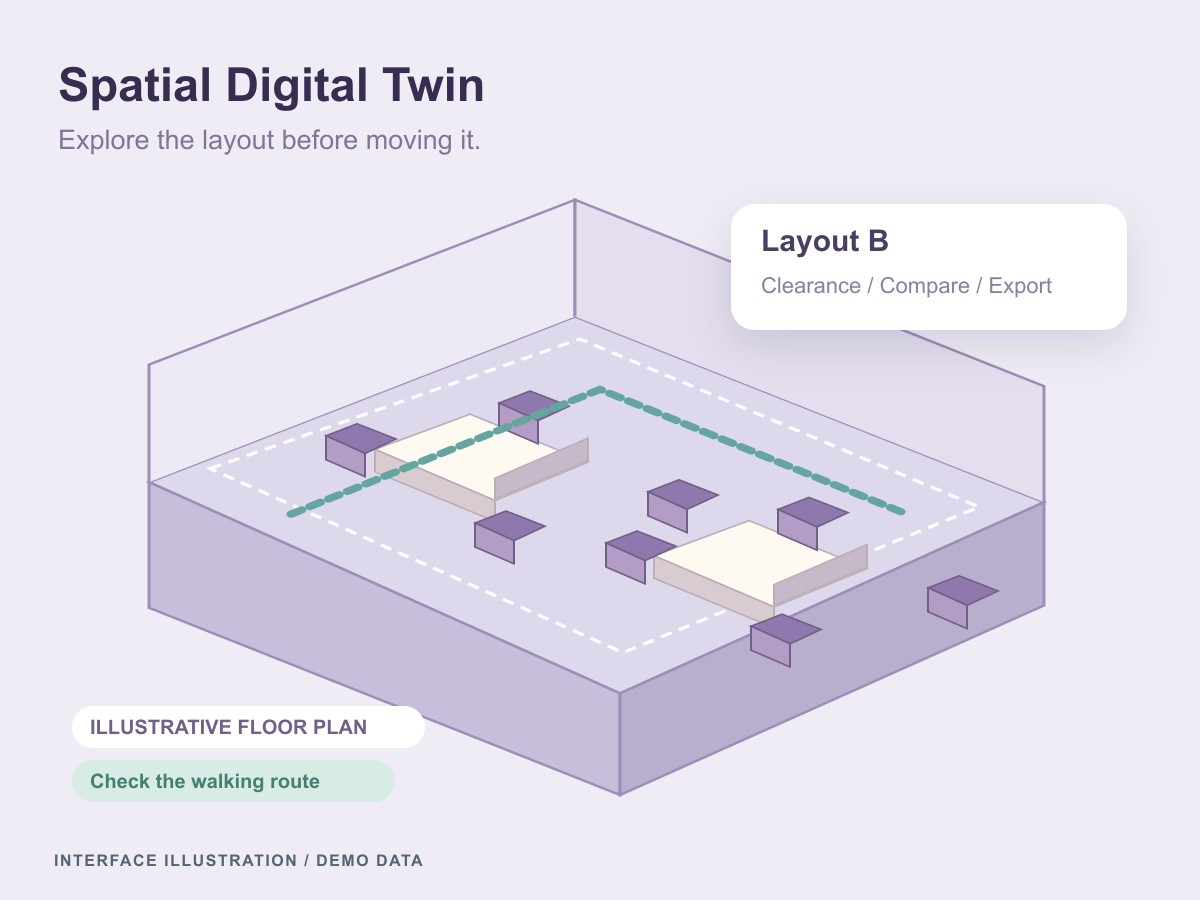
Spatial Digital Twin
An editable 3D planning prototype for comparing room layouts, checking clearances, and simulating queues before a space is rearranged.
A few useful answers
Before we begin.
Every project is different. These answers can help you prepare for the first conversation.
Do we need separate iOS and Android applications?
Not necessarily. A cross-platform approach can share much of the application code, while native development may suit demanding device or performance requirements. We compare the options against your users, budget, and feature needs.
Can the application work without an internet connection?
Selected workflows can be designed to work offline. We agree on which data is stored on the device, how changes synchronize, and what happens when records conflict. Some features still require a connection.
Can you help prepare an app store release?
We can include release preparation, device testing, and submission support in the project scope. Your organization retains ownership of its store accounts, and final approval remains with the platform.
Can you improve an existing mobile application?
Yes. We first review the codebase, architecture, crash reports, and key user journeys. From there, we recommend a targeted improvement plan or a rebuild when the existing foundation makes that more practical.
From our journal
A little context for your next decision.
Offline Field Service Apps: Plan Sync and Conflicts
Design an offline field service app with local task records, visible sync status, protected attachments and explicit rules for conflicting updates.
Mobile Push Notifications: Design Useful Next Actions
Plan mobile push notifications around urgency, permission, safe deep links and observable delivery limits instead of sending every event as an alert.
Mobile App Onboarding: Design Patterns That Keep Users
App onboarding patterns that get new users to value fast: when to ask for sign-up, OTP and permissions, and which funnel metrics to track from launch.
How Long Does It Take to Build an App? Realistic Timelines
A realistic app development timeline, phase by phase: discovery, design, build, testing and store release, plus what adds months and how to avoid it.
Super Apps and Mini Apps: Lessons for Indonesian Businesses
What the super app and mini app models teach Indonesian businesses: when to build your own app, when to use existing platforms, and how to design for growth.
Mobile App Maintenance: Plan Releases Beyond Launch
Plan mobile maintenance for platform changes, dependency updates, device testing and recovery so the application remains usable after its first release.
Let’s connect the dots
Let's make your next step clear.
Tell us where mobile apps could help your business. We will start with your needs and work from there.