Computer vision
Make visual information useful.
Cameras and images can tell you more than what happened. We build vision systems that surface relevant events and connect those signals to the people who need to act.
From business need to working solution.
A clear scope. A thoughtful experience. A practical path to launch.
The starting point
Sound familiar?
The problems behind the project are where the useful work begins.
Visual review depends on manual attention
Monitoring footage and inspecting images can be repetitive, with important moments easy to miss.
Camera footage stays disconnected from operations
A video feed records activity but rarely provides the structured information needed for reporting.
A model must work in your real environment
Lighting, camera position, object variation, and operational constraints all affect what a system can reliably detect.
What we build
Useful by design.
Concrete capabilities, shaped around your workflow and the people who use it.
Video analytics and monitoring
Detect defined events, count objects, and produce useful signals from suitable camera streams.
Visual inspection workflows
Assist review of products, assets, or damage with detections that can be checked by a person.
Labelling and model pipelines
Prepare representative data, annotation workflows, and evaluation sets for a specific vision task.
Operational vision dashboards
Connect detections to alerts, searchable events, and reporting with appropriate retention controls.
The foundation
Technology that fits the job.
We choose the stack around your requirements, integrations, and long-term ownership. The approach is agreed during discovery.
Models
Data
Deployment
How we work
No mystery between idea and launch.
You can see the direction, review the work, and understand what comes next.
Understand
We map your workflow, listen to the people who use it, and agree on the business problem worth solving.
A clear scope, priorities, and a practical plan.
Design
We turn the plan into user journeys, interface prototypes, and a technical approach you can review before development.
An agreed prototype and implementation roadmap.
Build
We develop in focused iterations, demonstrate working software, and test the important workflows with your team.
A tested product, with progress visible throughout.
Grow
We prepare the release, hand over documentation, and plan improvements around feedback from real use.
A supported launch and a roadmap for what comes next.
Selected work
See the thinking in practice.
Explore project approaches, their scope, and their documented status.
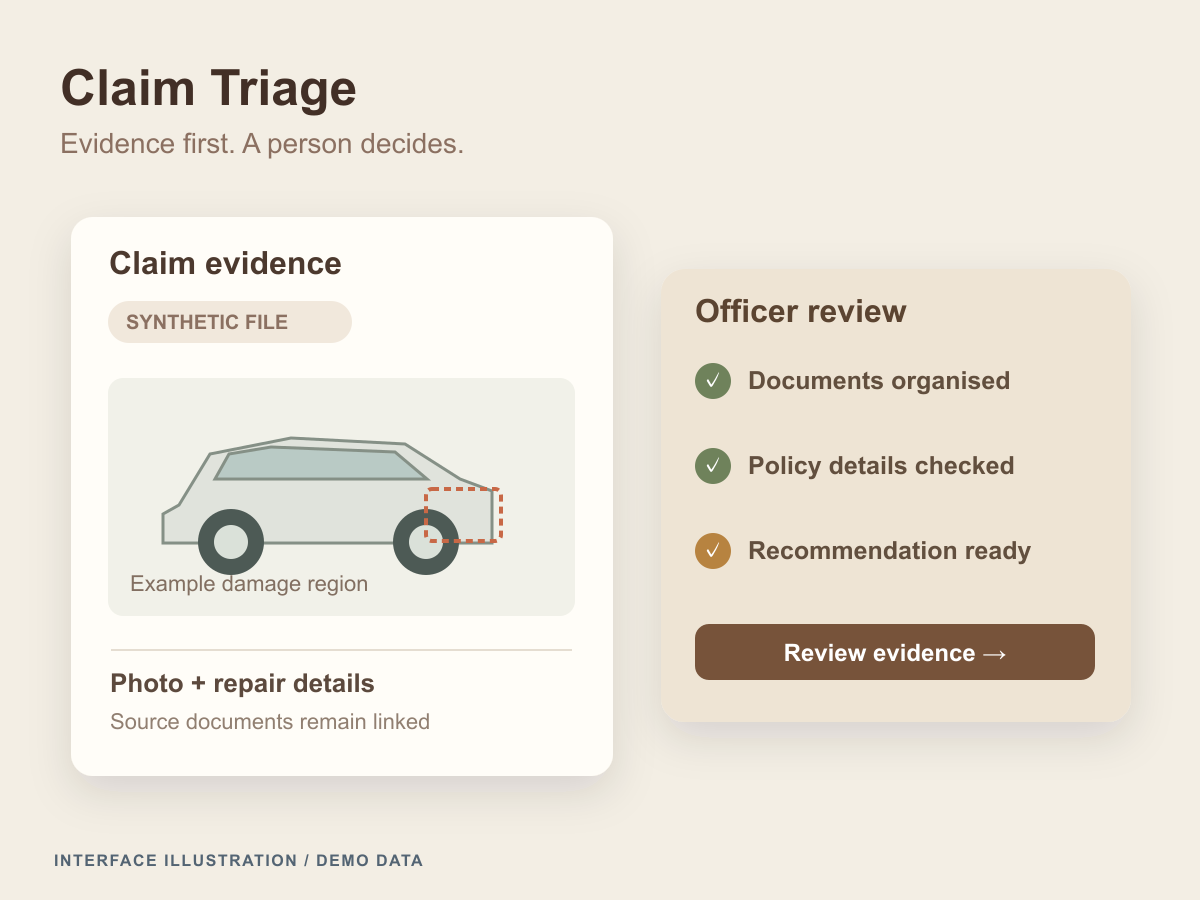
Claim Triage
An insurance review workspace linking claim documents, policy and repair checks, and traceable recommendations for a human officer.
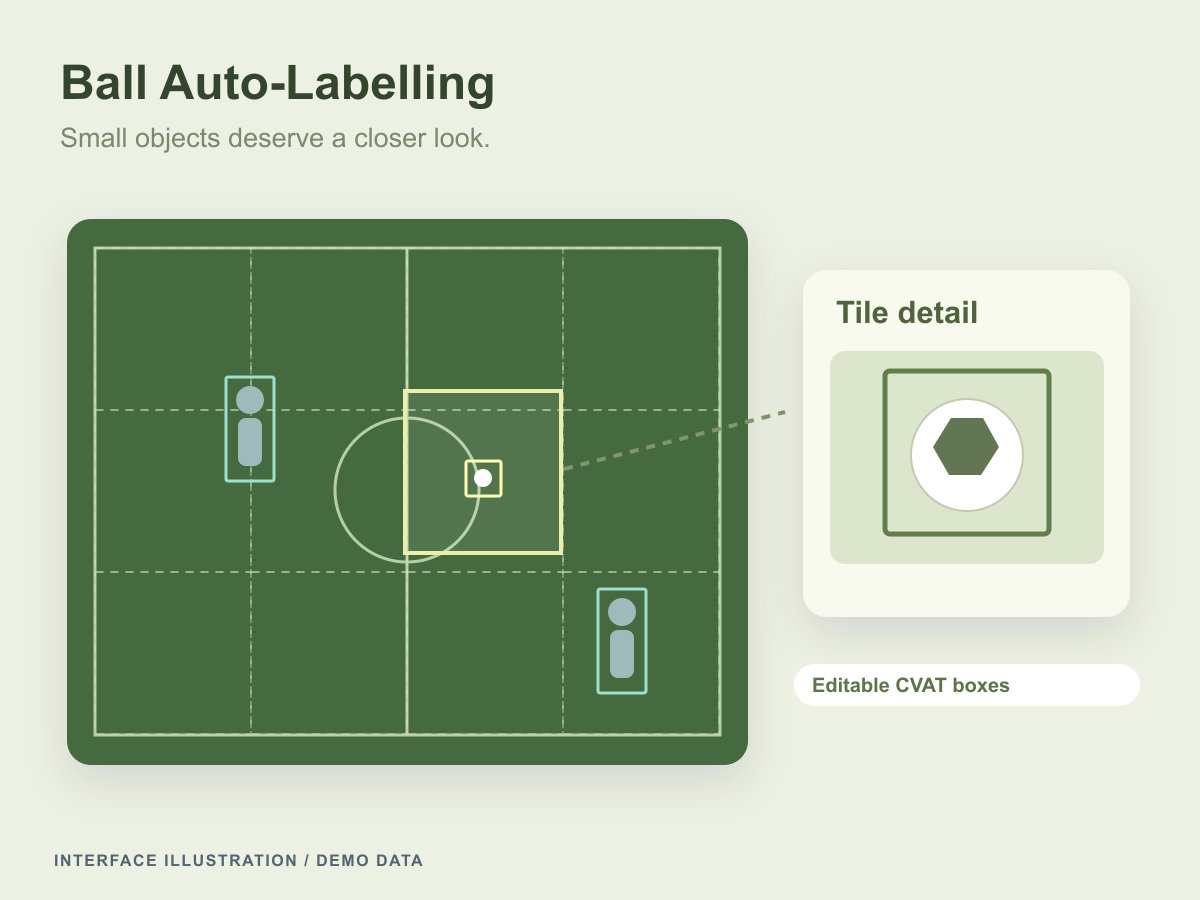
CVAT Ball Auto-Labelling
A custom CVAT adapter combining full-frame and tiled inference for small footballs, producing editable ball and person annotations.
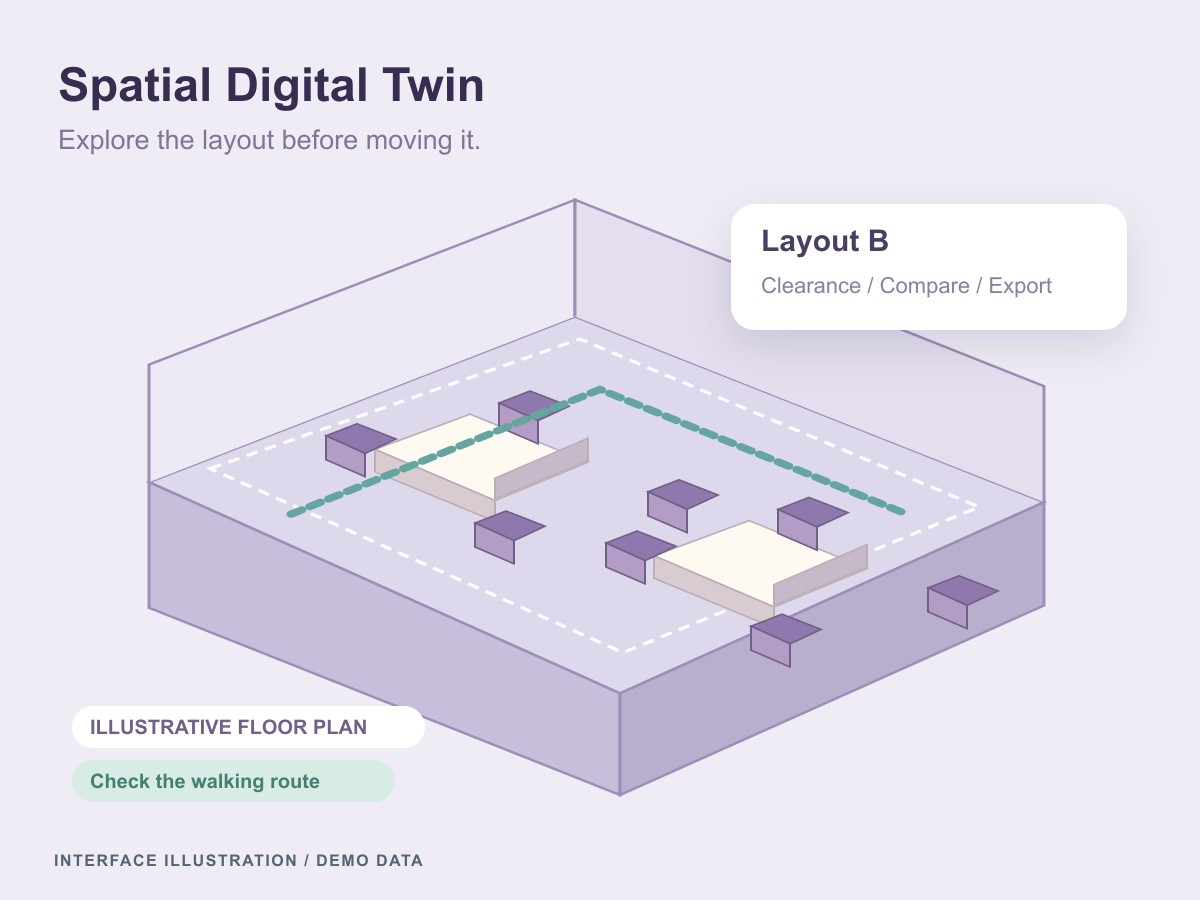
Spatial Digital Twin
An editable 3D planning prototype for comparing room layouts, checking clearances, and simulating queues before a space is rearranged.
A few useful answers
Before we begin.
Every project is different. These answers can help you prepare for the first conversation.
Can you use our existing CCTV cameras?
Potentially. We review stream access, resolution, frame rate, camera placement, and the task to detect. A sample evaluation helps establish whether the existing cameras provide the information the model needs.
How accurate will the system be?
Accuracy depends on the task and the environment. We use representative test data, agree on measures such as missed events and false alerts, and validate performance in a pilot before making deployment decisions.
Can computer vision run on-site?
An edge deployment can be considered when latency, connectivity, or data handling requirements favor on-site processing. We assess the hardware and workload alongside cloud and hybrid options.
How do you handle privacy in video projects?
We plan data minimization, access restrictions, retention, and review responsibilities with your organization. The intended purpose and necessary permissions should be established before collecting or connecting footage.
From our journal
A little context for your next decision.
Edge AI for Computer Vision: Where Processing Should Run
Compare edge and cloud vision processing through latency, connectivity, privacy, device capacity and the recovery path your operation needs.
Synthetic Data: Training Vision Models When Real Data Is Scarce
How synthetic data for computer vision fills gaps when real images are scarce: rendering, compositing and generative methods, and how to prove they work.
Computer Vision Quality Control: Plan a Factory Pilot
Plan a factory vision pilot around defect definitions, inspection conditions, review decisions and measured false accepts and rejects.
Camera Analytics Pilot: Measure Real Operational Quality
Plan a camera analytics pilot with representative footage, reviewed labels, event-level measures and evidence that alerts support the intended workflow.
Shelf Monitoring with Computer Vision: Detecting Out-of-Stock Items
How shelf monitoring with computer vision spots empty facings and planogram gaps, which camera setup suits your stores, and how to run a fair pilot.
Face Recognition Attendance: Evaluate Safer Alternatives
Assess attendance workflows by considering privacy, false matches, shared devices and alternatives before selecting a biometric recognition system.
Let’s connect the dots
Let's make your next step clear.
Tell us where computer vision could help your business. We will start with your needs and work from there.