PROJECT STUDY
PrototypeFinly
Everyday money. Shared bills. Clearer decisions.
A personal-finance MVP connecting receipt review, shared bills, realtime item claims, and traceable settlement on a balanced ledger.
Explore the build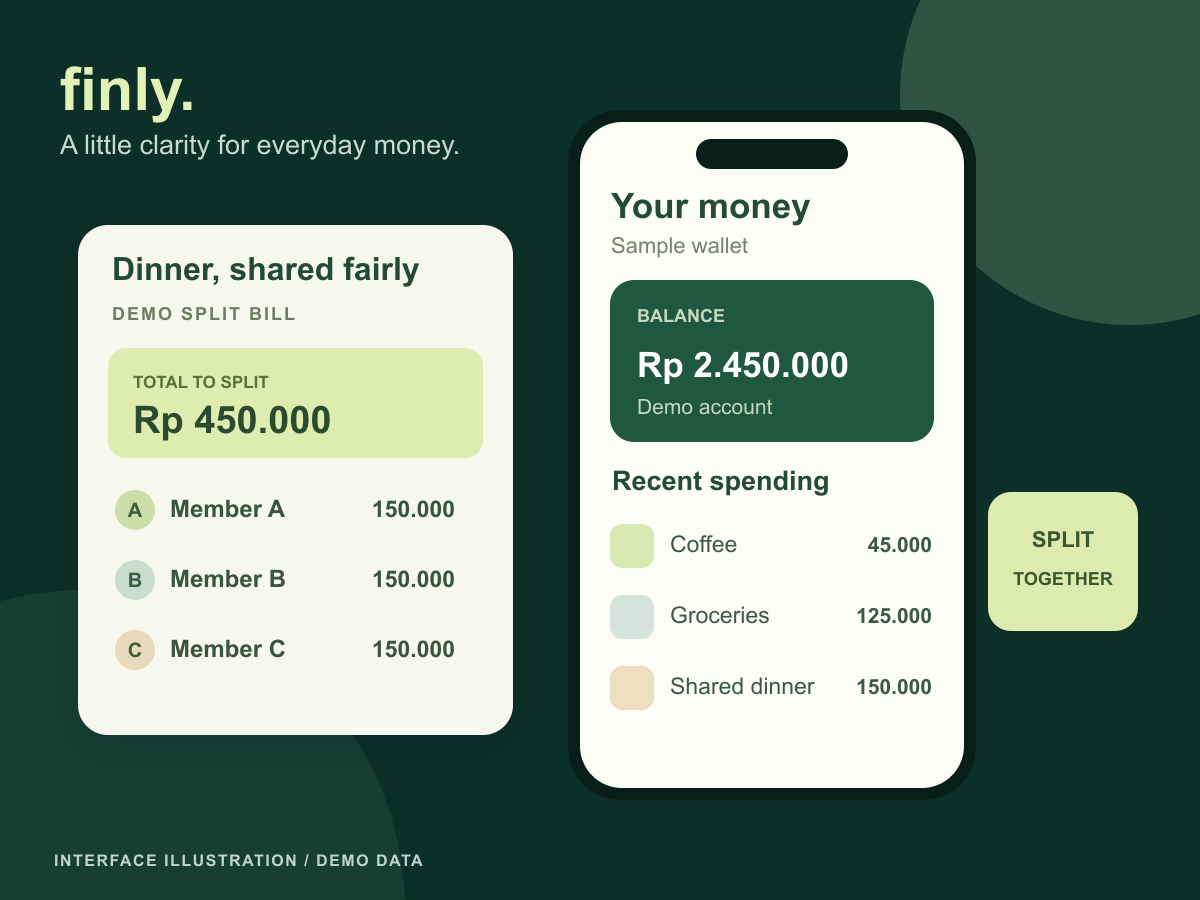
At a glance
- Stage
- Prototype
- Industry
- Finance
- Context
- Internal product
- Capabilities
- 7
- Technologies
- 10
- Year
- 2026
Recorded in project documentation on 9 October 2026; a historical verification report, not rerun for this portfolio update
Reported in the earlier MVP verification notes against a local API and synthetic data; not native-device or production validation
The challenge
Shared spending needs more than a calculator.
People need to review receipt items, agree on discounts and charges, understand who owes whom, and correct a mistake without losing the history behind a balance.
Finly is an internal personal-finance and bill-splitting MVP for that workflow. It records money and shared obligations; the current scope does not hold funds or initiate a payment through a provider.
What we built
One Expo and React Native app connects to a typed Fastify API, with Indonesian as the default language and English available.
Accounts and transactions
Personal accounts, expenses, income, and transfers connect to a balanced double-entry ledger
Capture with review
A Review Inbox lets users check captured information, correct fields, and manage duplicates. Current source formats are synthetic DEMO formats; real bank and e-wallet formats remain unverified
Flexible bill splits
Equal, custom-amount, percentage, and item-based splits handle agreed discounts, service charges, taxes, and rounding
Realtime item claims
Participants can claim items and see shared bill activity across open screens
Receipt-to-bill workflow
Receipt images feed an editable review screen through configurable hosted vision providers or Tesseract and rule-based fallback. Model output is validated before it enters a bill
Controlled payment-detail sharing
Circle permissions, masking, and PIN step-up govern access to stored payment details. Settlement is recorded through participant and payer confirmation
Correction and history
Bill changes, reversals, and adjustments retain a traceable relationship to the original records
Accounts and transactions
Personal accounts, expenses, income, and transfers connect to a balanced double-entry ledger
Capture with review
A Review Inbox lets users check captured information, correct fields, and manage duplicates. Current source formats are synthetic DEMO formats; real bank and e-wallet formats remain unverified
Flexible bill splits
Equal, custom-amount, percentage, and item-based splits handle agreed discounts, service charges, taxes, and rounding
Realtime item claims
Participants can claim items and see shared bill activity across open screens
Receipt-to-bill workflow
Receipt images feed an editable review screen through configurable hosted vision providers or Tesseract and rule-based fallback. Model output is validated before it enters a bill
Controlled payment-detail sharing
Circle permissions, masking, and PIN step-up govern access to stored payment details. Settlement is recorded through participant and payer confirmation
Correction and history
Bill changes, reversals, and adjustments retain a traceable relationship to the original records
The responsive interface targets phones and larger screens from one codebase. The documented local validation is for the web; a shared codebase does not establish that native behavior has been tested on a device.
How it works
Shared TypeScript money logic
Ledger, API and live updates
PGlite and Drizzle provide the current MVP data layer. Ledger corrections use new postings rather than silently changing posted history. Fastify owns authorization and validation, while Socket.IO carries live item-claim and notification updates.
Reviewed receipt processing
Receipt processing has an explicit review step and a fallback path. Hosted AI providers are configurable, and their replies are checked against the expected structure. This implementation does not imply verified extraction accuracy on real customer receipts.
Current stage
Prototype
- Research
- Prototype
- Pilot
- Production
Project documentation records 372 critical tests passing on 9 October 2026. Earlier MVP verification notes record 15 web journeys passing against the local API and synthetic demo data. These are historical project reports; the tests and finance database were not rerun or inspected for this portfolio update.
Read the full status
Finly remains an internal prototype. The current API rejects its development-only OTP provider in production mode, so real authentication requires further implementation. Native Android and iOS device checks, production push, managed secrets, and real financial-source integrations remain open. The hosted receipt AI path was documented as tested with stubbed provider replies; no live-model accuracy or commercial result is claimed.
The gallery shows synthetic DEMO receipts used to exercise parsing and review. They are test inputs, not customer financial records or screenshots of the application.
Where this fits
Apps that manage shared obligations need understandable totals, reviewable changes, and clear access rules. We connect mobile apps, web applications, and AI-assisted processing around that foundation. Talk to our team about your product.
Inside the project
Synthetic receipt fixtures used to exercise the review workflow.
A 10% member discount taken off before PB1 is added. · Synthetic test dataView larger A column layout that uses commas instead of dots for thousands. · Synthetic test dataView larger Prices that already include VAT, so no tax is added on top. · Synthetic test dataView larger A long receipt taken in two photos: the first holds the items. · Synthetic test dataView larger The second photo overlaps the first and ends with the charges and total. · Synthetic test dataView larger
KEEP EXPLORING
Another problem. A different approach.
Logistics Intelligent
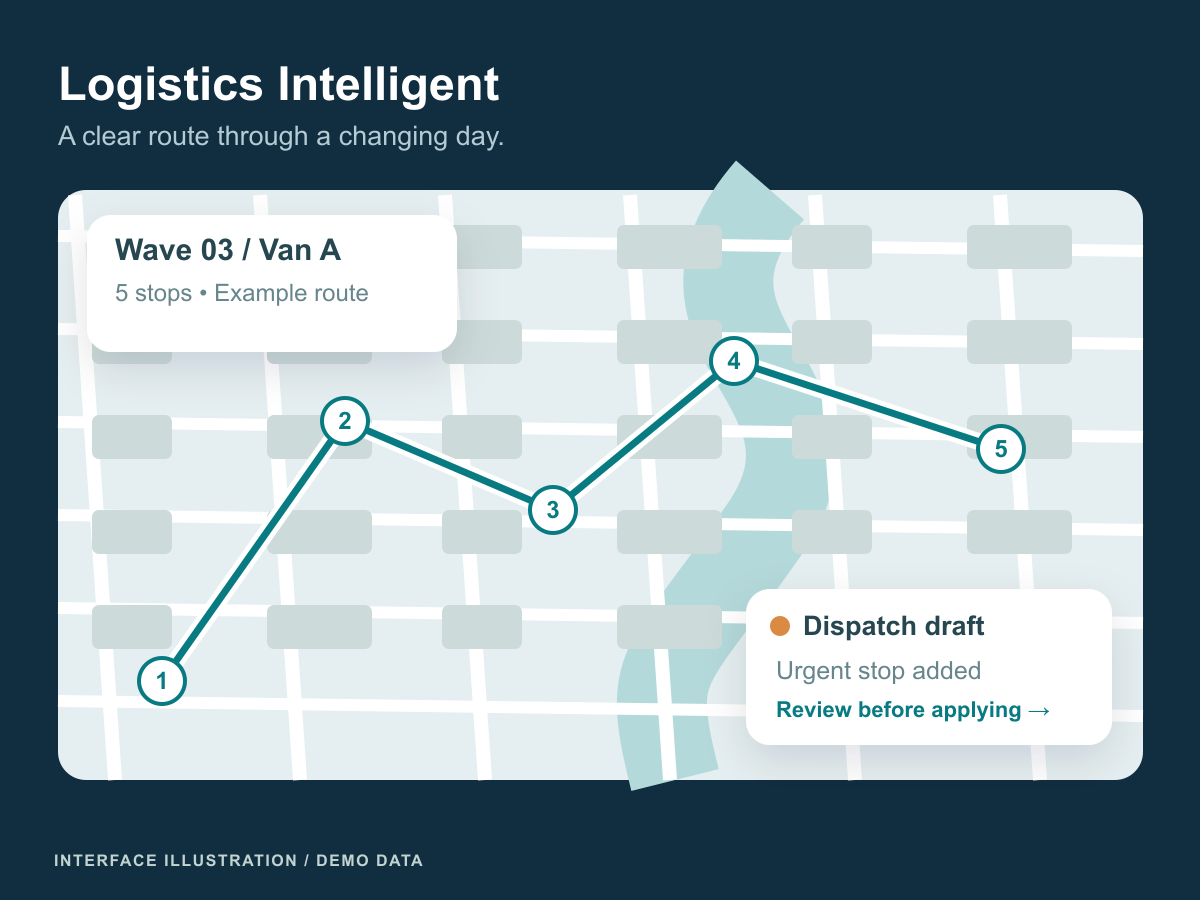
A dispatch and supply-planning prototype for delivery routes, fleet disruptions, and retail replenishment across multiple warehouses.
Spatial Digital Twin
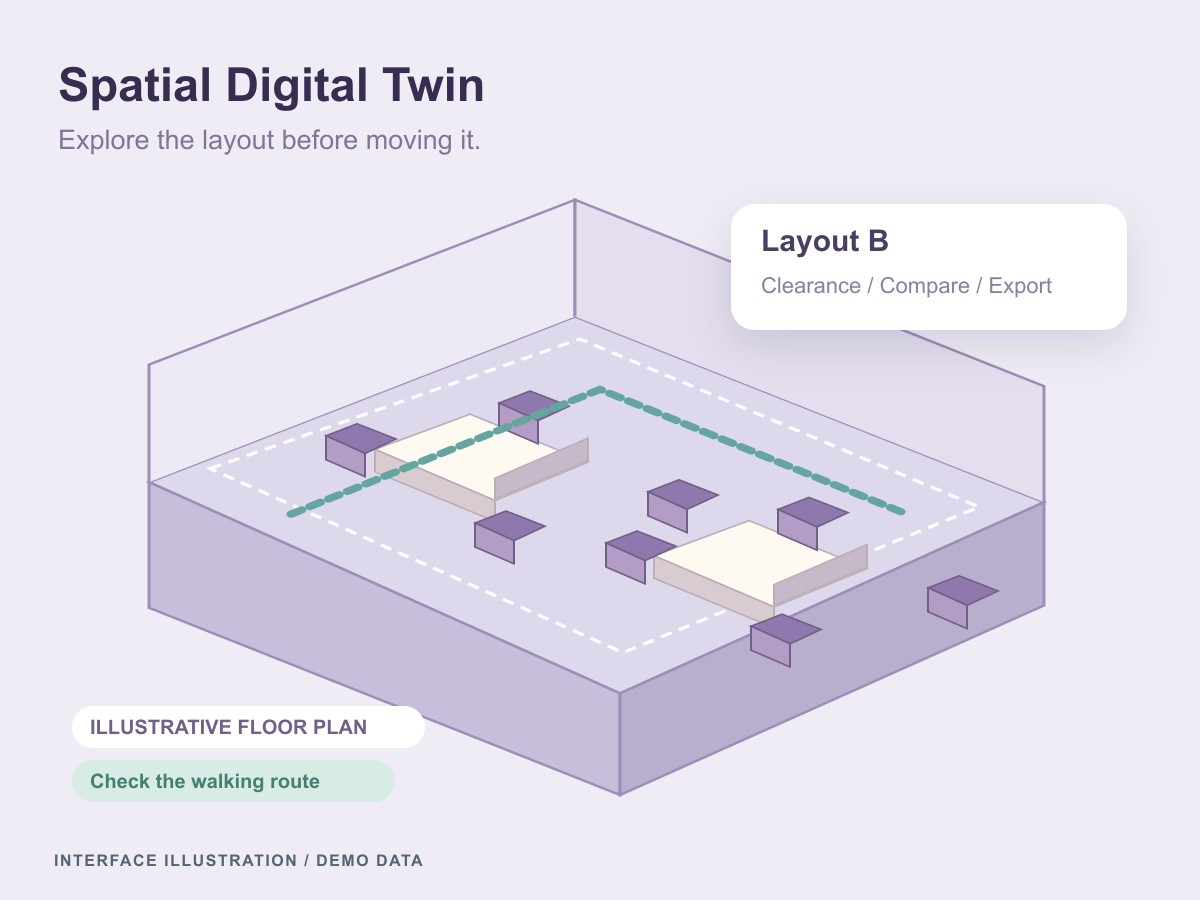
An editable 3D planning prototype for comparing room layouts, checking clearances, and simulating queues before a space is rearranged.
Let’s connect the dots
Let's put these ideas to work.
Share a process, product, or problem you want to improve. We will work through the possibilities together.